

Can Professional Whitening Actually Tackle Those Deep, Stubborn Stains?
Looking in the mirror and wondering if professional teeth whitening can handle those deep, dark stains that seem permanent on your teeth? You’re not alone, and the answer is more nuanced than you might expect.
Deep intrinsic stains are different beasts compared to surface stains from your morning coffee. While professional whitening can be effective for many types of discolouration, understanding what causes deep stains helps set realistic expectations for treatment.
Let’s explore what professional whitening can achieve with deep stain removal dental treatments and when alternative approaches might be better suited to your situation.
Understanding Deep Intrinsic Stains vs Surface Stains
Surface (extrinsic) stains affect the outer tooth layer and typically come from:
- Coffee, tea, red wine, and other staining foods
- Tobacco use and smoking
- Poor oral hygiene habits
Deep intrinsic stains occur within the actual tooth structure from:
- Tetracycline antibiotics taken during tooth development
- Excessive fluoride exposure in childhood (dental fluorosis)
- Trauma to developing teeth
- Certain medical conditions or treatments
- Natural ageing processes
- Previous root canal procedures
Intrinsic stains are embedded within the tooth’s internal structure, making them significantly more challenging to address with conventional whitening methods.
How Professional Teeth Whitening Works
Professional teeth whitening uses higher concentrations of bleaching agents than over-the-counter products, typically hydrogen peroxide or carbamide peroxide. These break down stain molecules within the tooth structure.
Professional methods include:
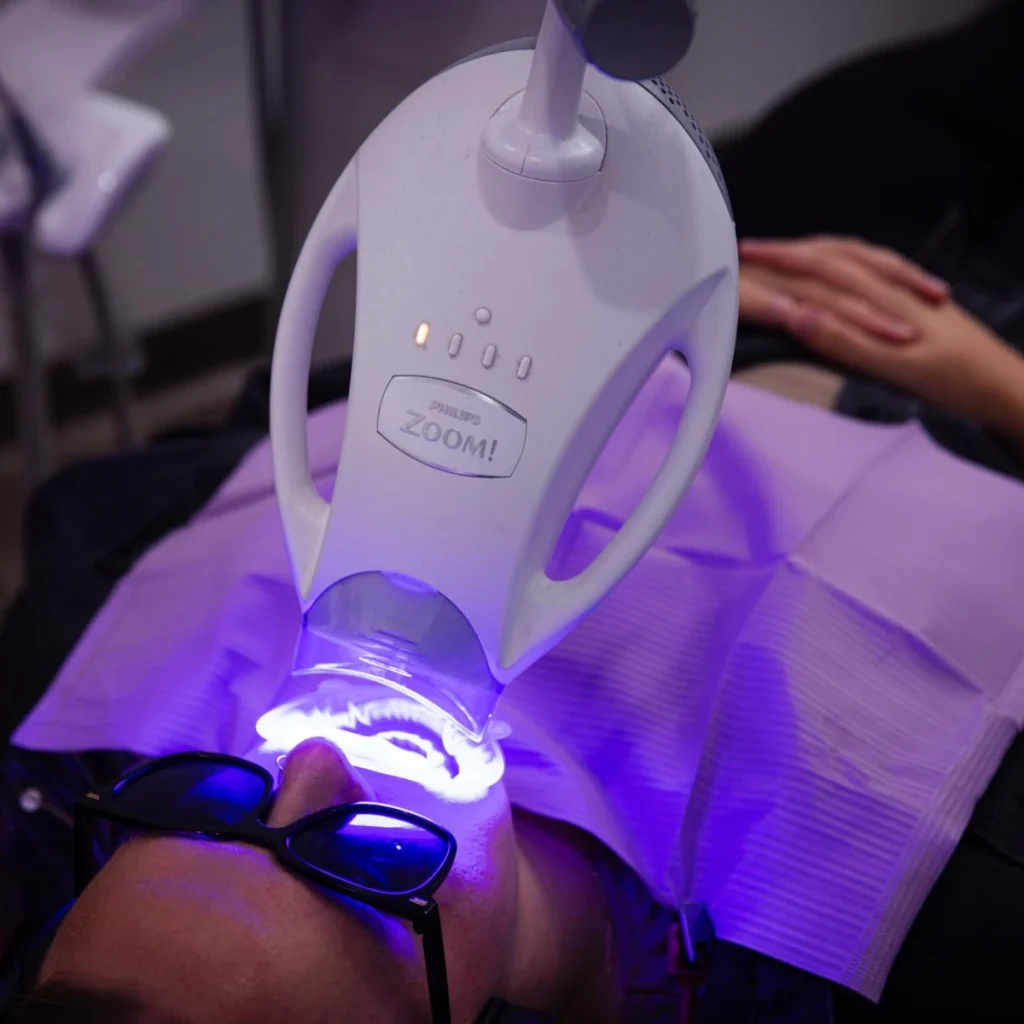
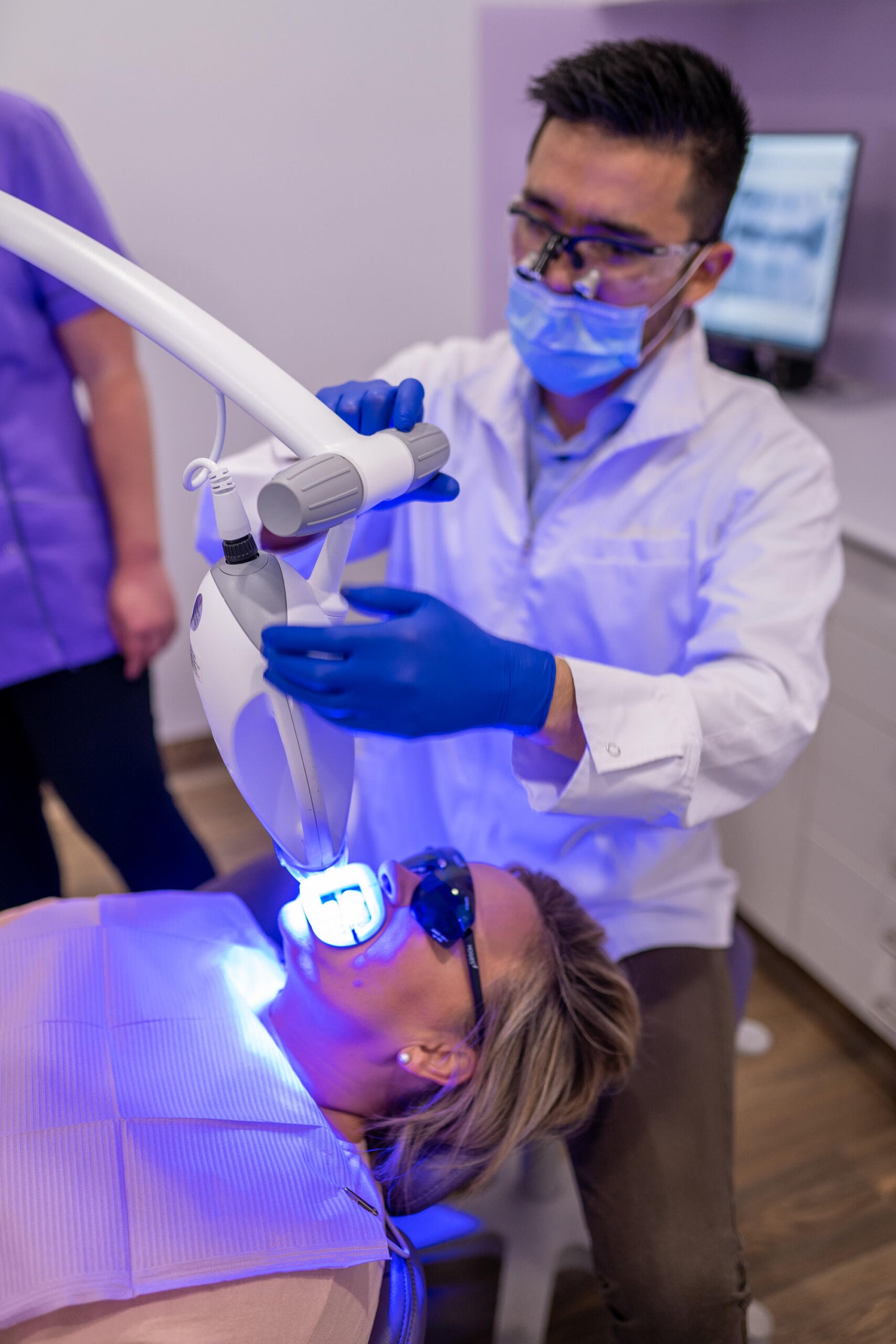
- In-office treatments with concentrated bleaching gels
- Custom take-home trays with professional-strength gel
- Combination approaches using both methods
Important considerations:
- Results vary significantly based on stain type and severity
- Some intrinsic stains respond better than others to treatment
- Multiple sessions often needed for optimal results
- Not all discolouration can be completely removed with whitening alone
What Professional Whitening Can Achieve with Deep Stains
Professional teeth whitening can provide improvement for certain intrinsic stains, though results vary based on the underlying cause and severity.
Stains that may respond to professional whitening:
- Age-related yellowing and darkening
- Mild to moderate tetracycline staining (yellow-brown varieties)
- Some fluorosis cases
- Certain trauma-related discolouration
Realistic expectations for deep stain removal dental treatment:
- Significant improvement rather than complete elimination
- Multiple treatment sessions typically required
- Gradual lightening over weeks or months
- Some stains may lighten but remain visible
According to Australian dental research, professional whitening can achieve noticeable improvement in many cases of intrinsic staining, though complete removal isn’t always possible.
When Professional Whitening Has Limitations
Some deep intrinsic stains present challenges that may require alternative approaches.
Stains that often resist conventional whitening:
- Severe tetracycline staining (grey-blue varieties)
- Extensive fluorosis with brown discolouration
- Stains from certain medications
- Metal-based dental restorations causing internal staining
Why some stains don’t respond well:
- Stain molecules may be too large to break down
- Discolouration may be structural rather than pigment-based
- Location within the tooth may be inaccessible to bleaching agents
Your dental practitioner can assess whether professional whitening is likely to be effective for your particular staining.
Alternative Approaches for Resistant Deep Stains
When professional whitening reaches its limits with deep stain removal dental cases, several alternatives can help achieve your aesthetic goals.
Cosmetic bonding:
- Direct composite resin over stained areas
- Cost-effective for localised staining
- Completed in a single appointment
Porcelain veneers:
- Custom shells covering front tooth surfaces
- Excellent coverage for resistant stains
- Natural-looking results
Crown restoration:
- Complete coverage for severely affected teeth
- Suitable when staining accompanies structural damage
Microabrasion:
- Removal of superficial enamel layers containing stains
- Effective for certain fluorosis types
- Often combined with whitening
Each approach has specific benefits and limitations that should be discussed with your dental practitioner.
The Assessment Process for Deep Stain Treatment
Determining the best approach for deep stain removal dental treatment requires assessment of your individual situation.
Initial evaluation includes:
- History of stain development
- Clinical examination of affected teeth
- Assessment of stain type and severity
- Discussion of aesthetic goals
Treatment planning factors:
- Likelihood of success with different approaches
- Time and cost considerations
- Patient preferences and lifestyle factors
This assessment helps ensure appropriate treatment recommendations for your specific staining and goals.
Making Informed Decisions About Stain Treatment
Choosing the right approach involves understanding your options and having realistic expectations.
Questions to discuss:
- What type of staining do you have?
- What results can reasonably be expected?
- How long will treatment take?
- What are the costs and maintenance requirements?
Factors to consider:
- Your aesthetic goals
- Budget and time constraints
- Overall oral health status
Remember that successful treatment involves realistic expectations and choosing the most suitable approach for your specific situation.
Wrapping It Up
Can professional teeth whitening effectively remove deep intrinsic stains? It depends on the specific type and severity of staining. While professional whitening can achieve significant improvement for many deep stains, complete removal isn’t always possible, and some may require alternative approaches.
The key is proper assessment to determine what type of staining you have and which deep stain removal dental treatments are most likely to achieve your goals. Whether that’s professional whitening, veneers, bonding, or other options depends on your circumstances.
Ready to explore your options for addressing deep stains? Give Greenvale Dental House a call on (03) 6163 3111 or complete our online enquiry form to book your comprehensive consultation. Our experienced team can assess your specific staining and explain all available treatment options.
Frequently Asked Questions
How long does professional whitening take to work on deep stains?
Deep intrinsic stains typically require longer treatment periods than surface stains. Results may become noticeable after 2-3 weeks of treatment, with optimal results often taking 6-8 weeks or longer depending on the severity and type of staining.
Are there any risks with professional whitening for deep stains?
Professional whitening is generally safe when performed under dental supervision. Some patients may experience temporary tooth sensitivity or gum irritation. Your dentist will assess your suitability for treatment and discuss any specific risks that may apply to your situation.
What if professional whitening doesn’t work for my deep stains?
If professional whitening doesn’t achieve the desired results, alternative treatments such as porcelain veneers, cosmetic bonding, or crowns may be recommended. Your dentist will discuss these options and help you choose the most appropriate approach for your specific needs.
DISCLAIMER:
The content has been made available for informational and educational purposes only. Dental House Group does not make any representation or warranties with respect to the accuracy, applicability, fitness, or completeness of the content.
The content is not intended to be a substitute for professional personal diagnosis or treatment. Always seek the advice of your dentist or another qualified health provider with any questions you may have regarding a dental or medical condition. Never disregard professional advice or delay seeking it because of something you have read or seen on the site.
Services We Mentioned:
More Dental Articles




This has to be the best dental practice I have ever been to (and I’ve been to a few over the years)! Have attended both Sunbury and most recently the Bacchus Marsh Dental House. All the Staff are wonderful. I see Dr. Fong and he is amazing. He makes me feel very comfortable and at ease. He is very personable and always make me laugh. Thanks also to the lovely Hannah who assisted when I had my recent procedure done.
Sobro O
Not just any old dental clinic, made to feel right at Home as soon as I walked in the door. Friendly and caring team and love the color purple throughout!
Scott S.
Had my first visit to Sunbury Dental House last week – they promise a gentle approach and having a crown prep done by Dr Fong after cracking a tooth, I’ve felt comfortable during my dental appointment. Being able to watch a movie during treatment certainly helped! Looking forward to my return visit in a few weeks!

