

Crown & Veneer Replacement Case Study in Melbourne
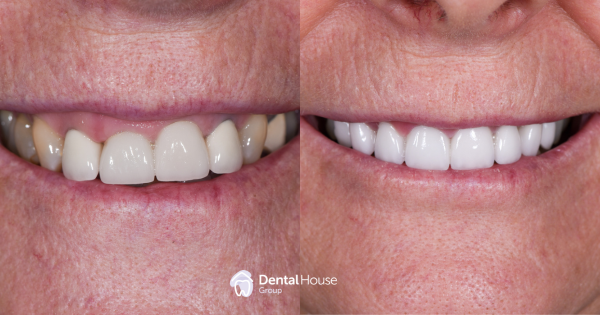

Can Replacing Old Crowns and Adding Veneers Improve Smile Appearance in Melbourne?
Case Note ID: Dec-2024-CR-VN-GV
Location: Greenvale Dental House (serving the Melbourne, Sunbury and surrounding areas)
Primary Treatments: Porcelain crowns, porcelain veneers
Supporting Technology: Digital shade analysis, laboratory-fabricated porcelain restorations
Presenting Clinical Problem
- Existing porcelain crowns showing marginal discolouration and aesthetic deterioration
- Gingival tissue discolouration adjacent to old crown margins
- Patient concerns regarding progressive aesthetic decline
- Assessment indicated scope for comprehensive anterior rehabilitation
- Primary objective: Replace failing restorations and improve overall anterior aesthetics
Treatment Plan & Clinical Process
Phase 1: Comprehensive Assessment
- Evaluation of existing crown integrity and underlying tooth structure
- Periodontal assessment to determine gingival health and biotype
- Radiographic examination of crowned teeth for endodontic complications
- Treatment planning to determine crown replacement versus veneer placement
- Discussion of aesthetic goals, limitations and treatment sequence
Phase 2: Crown and Veneer Preparation
- Removal of existing compromised crowns with evaluation of tooth structure
- Preparation of crowned teeth for new restorations
- Conservative preparation of adjacent teeth suitable for veneers
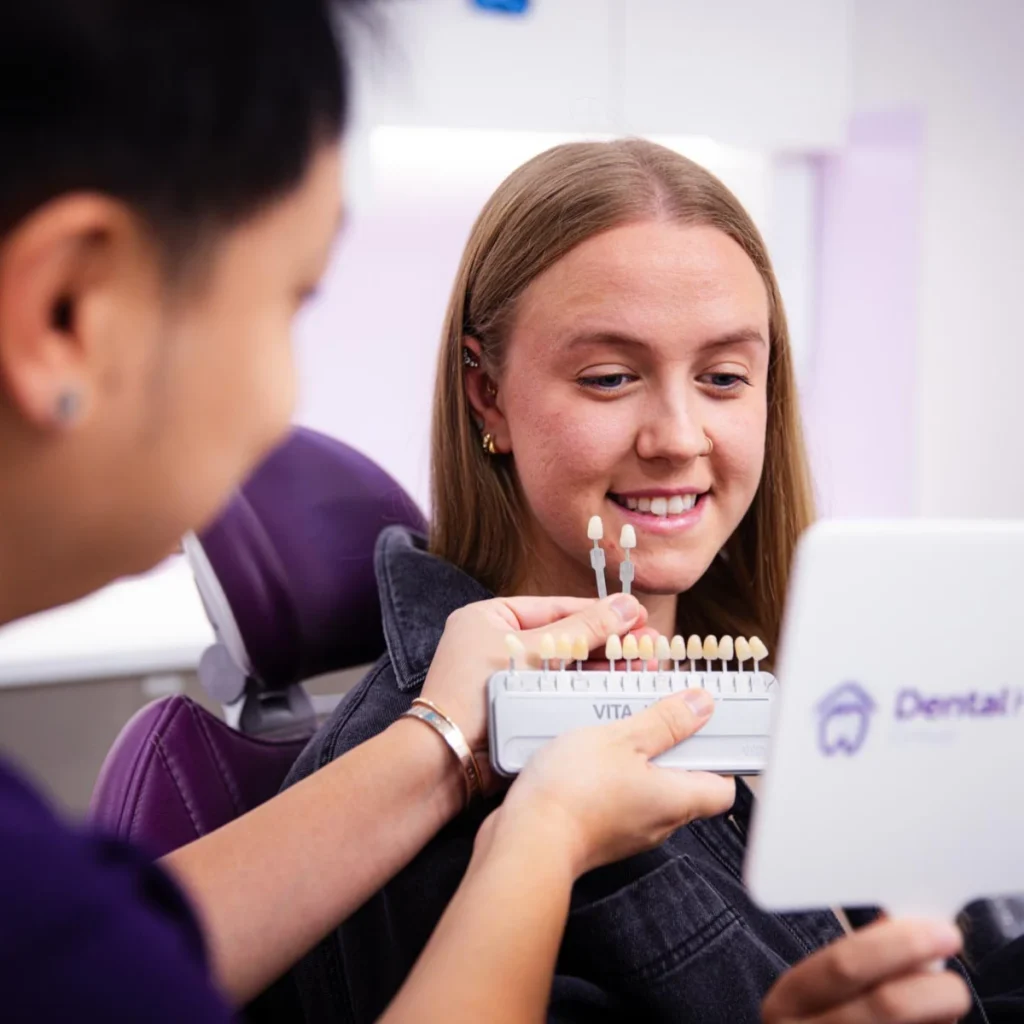
- Comprehensive shade analysis and characterisation documentation
- Temporary restorations during laboratory fabrication period
Phase 3: Definitive Restoration Placement
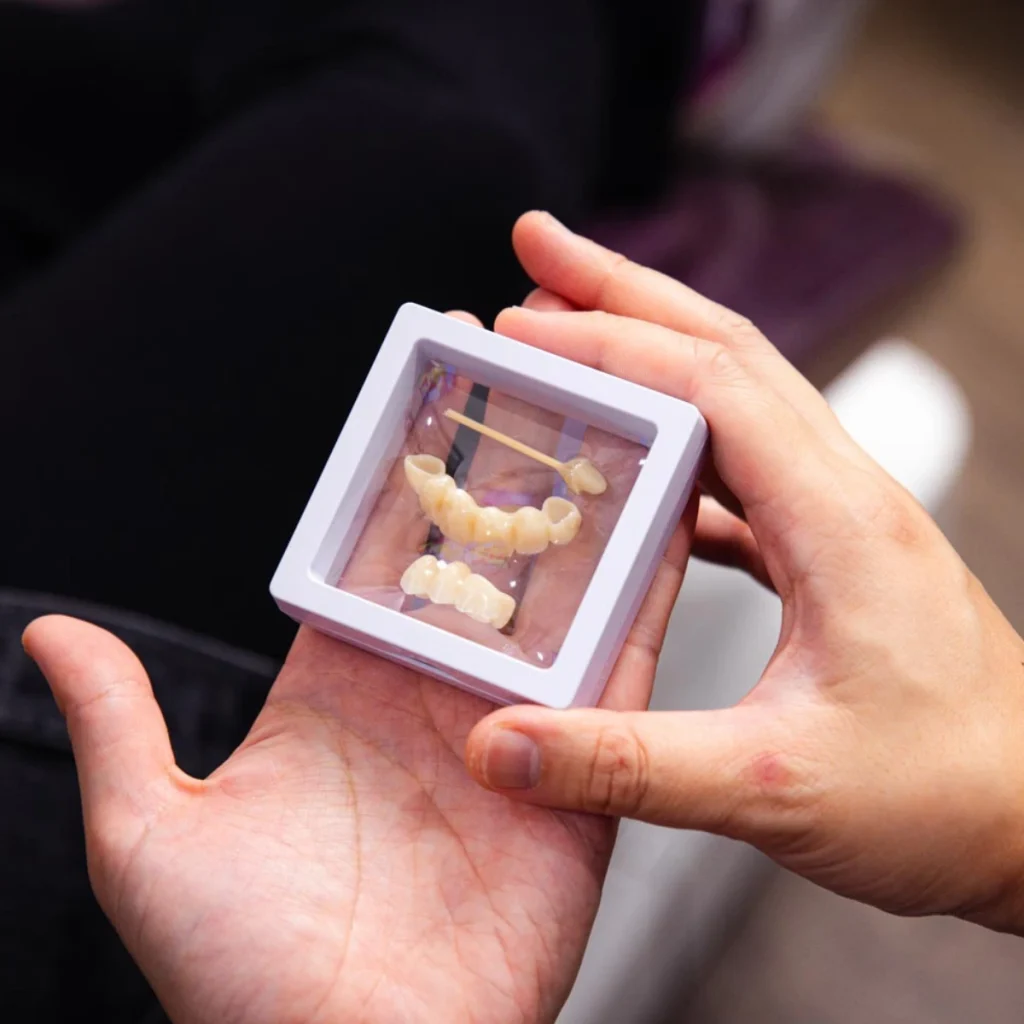
- Trial fitting and shade verification of laboratory-fabricated porcelain
- Permanent cementation using appropriate bonding protocols
- Occlusal adjustment to ensure proper bite relationships
- Gingival tissue evaluation and home care optimisation
- Post-placement monitoring and maintenance protocols
Clinical Outcome
The treatment approach involved replacing deteriorated crowns and placing porcelain veneers on adjacent teeth to create comprehensive anterior aesthetic improvement. Combining crowns and veneers allowed for individualised treatment based on each tooth’s structural requirements whilst achieving overall colour and contour harmony.
Individual responses to extensive aesthetic rehabilitation vary significantly. Treatment outcomes cannot be guaranteed. Gingival discolouration may require extended healing periods and may not completely improve in all cases. New crowns and veneers remain subject to chipping, fracture or debonding over time. Typical restoration longevity ranges from 10-15 years but varies considerably. Ongoing maintenance and eventual restoration replacement should be anticipated.
Frequently Asked Questions for Melbourne and Sunbury Patients
Why do gums appear dark around old crowns?
Gingival discolouration near crowns typically results from metal showing through thin tissue, corrosion products or chronic inflammation from poorly fitting margins. Replacing crowns with all-ceramic materials and ensuring optimal margin fit may improve appearance, though gingival tissue changes can be slow to resolve and improvement cannot be guaranteed in all cases.
How long do replacement crowns and veneers last?
Typical longevity ranges from 10-15 years, though outcomes vary considerably. Factors affecting lifespan include material selection, bite forces, parafunctional habits (grinding, clenching), oral hygiene quality and technical precision. Some restorations fail earlier due to fracture or debonding, whilst others may last significantly longer. Regular professional monitoring is essential.
What are the risks of replacing old crowns?
Crown removal can cause tooth fracture, particularly in heavily restored teeth. Underlying tooth structure may be more compromised than anticipated, potentially requiring root canal treatment or extraction. Temporary crown phases carry risk of sensitivity or temporary aesthetic concerns. New restorations may not achieve all desired aesthetic outcomes due to anatomical or tissue limitations.
Disclaimer: The material posted is for informational purposes only and is not intended to substitute for professional medical advice, diagnosis or treatment. Results vary with each patient. Any dental procedure carries risks and benefits. If you have any specific questions about any dental and/or medical matter, you should consult your dentist, physician or other professional healthcare providers.
Disclaimer: The outcomes shown are only relevant for this patient and do not necessarily reflect the results other patients may experience.
Disclaimer: The outcomes shown are only relevant for this patient and do not necessarily reflect the results other patients may experience.
Services We Mentioned:
More Patient Journeys





This has to be the best dental practice I have ever been to (and I’ve been to a few over the years)! Have attended both Sunbury and most recently the Bacchus Marsh Dental House. All the Staff are wonderful. I see Dr. Fong and he is amazing. He makes me feel very comfortable and at ease. He is very personable and always make me laugh. Thanks also to the lovely Hannah who assisted when I had my recent procedure done.
Sobro O
Not just any old dental clinic, made to feel right at Home as soon as I walked in the door. Friendly and caring team and love the color purple throughout!
Scott S.
Had my first visit to Sunbury Dental House last week – they promise a gentle approach and having a crown prep done by Dr Fong after cracking a tooth, I’ve felt comfortable during my dental appointment. Being able to watch a movie during treatment certainly helped! Looking forward to my return visit in a few weeks!

